
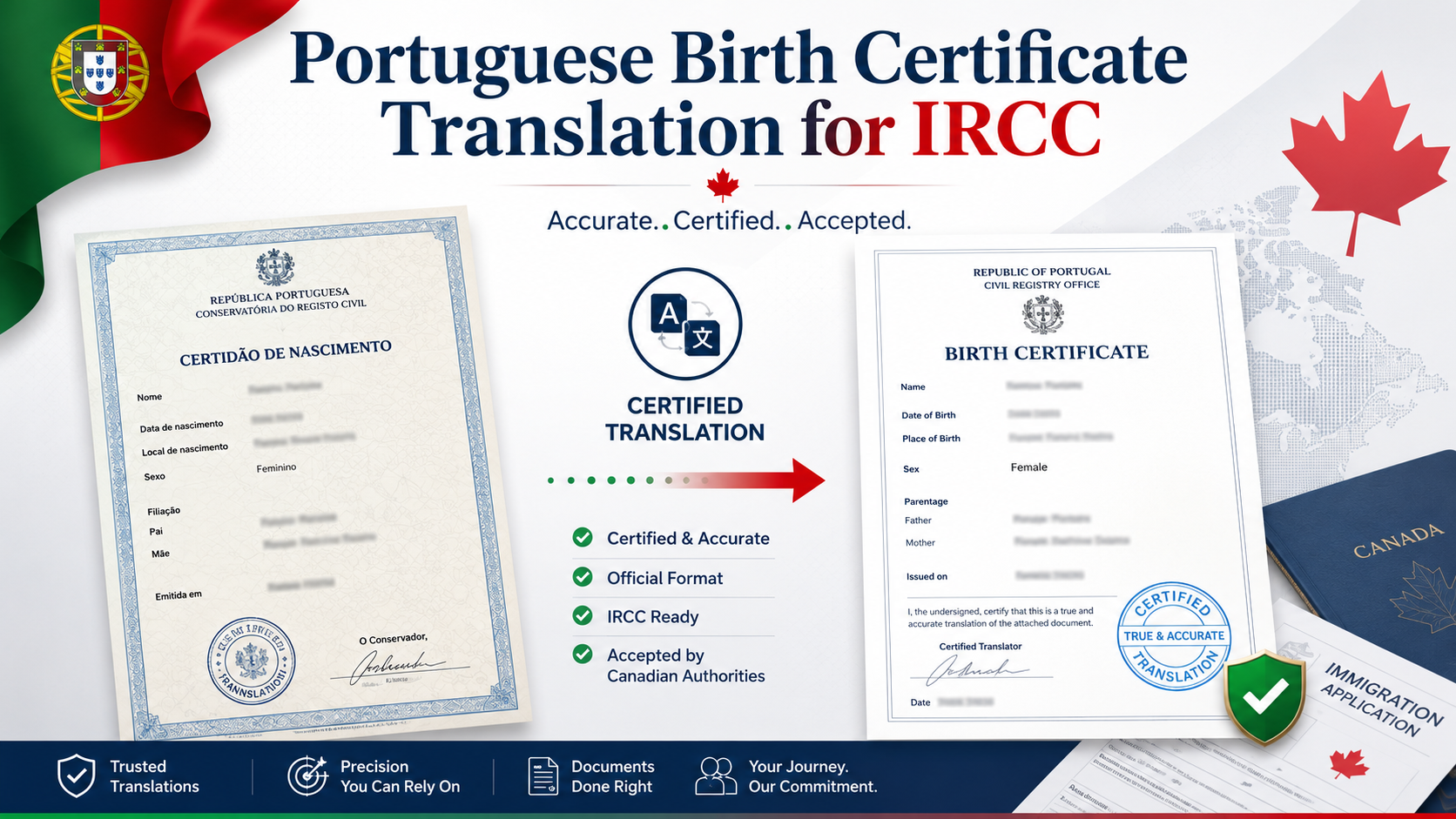
Main guide: For Portuguese birth certificate translation for IRCC, use our primary document guide. This article discusses overlapping information; check your programme-specific application requirements before ordering or submitting documents.
Portuguese birth records: identity, parents and civil registry
A Portuguese-language birth certificate may be needed to show identity, age or family relationship when requested by IRCC. Check which version of the civil record is required.
Compare the child’s full registered name, date and place of birth, parent details, issuing registry, certificate number and any later notes. Civil-registration terminology and extract types vary between Portugal, Brazil and other Portuguese-speaking jurisdictions.
Translate only required non-English or non-French wording and official marks, keeping the source date and names accurate. Follow the immigration programme’s document-copy requirements.
Check IRCC’s official document guidance. If a translation is required, use the document enquiry form.
What is a Portuguese Birth Certificate?
A Portuguese birth certificate, or “certidão de nascimento,” is an official document that records the birth of an individual in Portugal. This document serves multiple purposes, including proving identity, establishing citizenship, and providing essential information for legal and administrative processes. The birth certificate is typically issued by the civil registry office (Conservatória do Registo Civil) where the birth was registered.
There are two main types of birth certificates in Portugal: the “certidão de nascimento” (birth certificate) and the “certidão de nascimento integral” (full birth certificate). The standard birth certificate includes essential details such as:
- Full Name: The complete name of the individual as registered.
- Date of Birth: The exact date when the individual was born.
- Place of Birth: The location where the birth occurred.
- Parents’ Names: The names of the mother and father, which can be crucial for establishing lineage and citizenship.
- Registration Number: A unique identifier assigned to the birth record.
The full birth certificate may also contain additional information such as the individual’s civil status, any changes made to the name, and other relevant legal annotations. This comprehensive nature makes the birth certificate a vital document for various legal and administrative purposes, especially in the context of immigration.
Requirements for IRCC Documents
The IRCC has specific requirements for all documents submitted as part of an immigration application. These requirements are designed to ensure that all information is clear, accurate, and verifiable. When it comes to birth certificate translations, applicants must adhere to the following guidelines:
- Certified Translation: The translation must be performed by a certified translator who is recognized by the IRCC. This ensures that the translation is accurate and meets the necessary standards.
- Language Requirements: All documents must be translated into English or French. Submissions in other languages will not be accepted.
- Completeness: The translation must include all information present in the original document. Omitting details can lead to delays or rejections.
- Translator’s Declaration: The translator must include a declaration stating their qualifications and that the translation is a true and accurate representation of the original document.
- Format: The translated document should closely resemble the original in format, including any seals or stamps if applicable.
In addition to these requirements, applicants should ensure that their birth certificates are up to date. Any changes in personal information, such as a name change due to marriage, should be reflected in the birth certificate before translation. Failure to do so may result in inconsistencies that could complicate the immigration process.
When preparing to submit your application, it is advisable to check the IRCC’s official website for the most current requirements and guidelines, as these can change frequently. Staying informed will help you avoid common pitfalls associated with document submission.
Choosing a Certified Translation Service
When it comes to translating your Portuguese birth certificate for IRCC purposes, selecting a certified translation service is paramount. But what exactly qualifies as a certified translation? A certified translation is one that is completed by a professional translator who has the necessary credentials and expertise to ensure accuracy. This includes being a member of a recognized professional body or having specific certifications that validate their skills.
Using a professional service offers several benefits:
- Accuracy: Certified translators are trained to understand the nuances of both the source and target languages, ensuring that the translation is precise and reflects the original document’s meaning.
- Legal Compliance: Professional services are familiar with the IRCC’s requirements and can ensure that your translation meets all necessary legal standards.
- Timeliness: Experienced translation services can provide quick turnaround times, which is crucial when dealing with immigration deadlines.
- Confidentiality: Reputable translation services prioritize client confidentiality, ensuring that your personal information remains secure.
When selecting a translation service, consider checking their reviews, asking for references, and confirming their experience with IRCC documents. This due diligence will help ensure that you receive a high-quality translation that meets all necessary requirements.
The Process of Translating a Portuguese Birth Certificate
The process of translating a Portuguese birth certificate involves several key steps to ensure accuracy and compliance with IRCC standards:
- Document Collection: Gather the original birth certificate and any additional documents that may be required for context, such as identification or previous translations.
- Choosing a Translator: Select a certified translator or translation service that specializes in IRCC documents. Verify their credentials and experience.
- Translation: The translator will convert the document into English or French, ensuring that all information is accurately represented. This includes translating names, dates, and any official terminology.
- Quality Assurance: After the initial translation, a second translator may review the work to catch any errors or inconsistencies. This step is crucial for maintaining high standards.
- Certification: The translator will provide a certification statement, affirming the accuracy of the translation. This statement is essential for submission to the IRCC.
- Delivery: The completed translation is delivered to the client, often in both digital and hard copy formats. Ensure that the format matches the IRCC’s submission requirements.
Common challenges during this process can include variations in names due to cultural differences, discrepancies in date formats, and the need for specific terminology that may not have direct translations. A skilled translator will navigate these challenges effectively, ensuring that the final document is both accurate and compliant.
Cost Factors for Birth Certificate Translation in Canada
The cost of translating a Portuguese birth certificate in Canada can vary widely based on several factors. Understanding these factors can help you budget appropriately for your translation needs:
- Complexity of the Document: If your birth certificate includes additional annotations or requires extensive legal terminology, the translation may take longer and cost more.
- Turnaround Time: If you need the translation completed quickly, many services offer expedited options at a higher rate.
- Certification Fees: Some translation services may charge an additional fee for the certification process, which is necessary for IRCC submissions.
- Service Provider: Different translation services have varying pricing structures. It’s advisable to compare quotes from multiple providers to ensure you’re getting a fair price.
Translation costs depend on document length, certification and turnaround; request a quote for the actual record instead of using unsupported averages.
Common FAQs about Portuguese Birth Certificate Translation
Why is a certified translation required for IRCC?
A certified translation is required to ensure accuracy and authenticity of documents submitted to the IRCC. The IRCC has strict guidelines on document submissions, and only translations from recognized professionals are accepted.
How long does it take to translate a birth certificate?
The time required to translate a birth certificate typically ranges from a few days to a week. This timeframe depends on the service provider’s workload and the complexity of the document.
What if my birth certificate is not in Portuguese?
Translation services can handle various languages. If your birth certificate is in a different language, ensure to check with the provider for specific requirements regarding the translation.
Can I translate my own birth certificate for IRCC?
Self-translations are generally not accepted by the IRCC. Professional certified translations are required to meet the necessary standards for document submission.
What information is typically included in a birth certificate?
A birth certificate typically includes the full name, date of birth, place of birth, and parents’ names, along with other vital statistics that may be relevant for legal and administrative purposes.
Document verification checklist
Compare names, official registry details, dates, seals and annotations with the Portuguese-language source. Accurate translation cannot guarantee an immigration decision.
Conclusion: Ensuring a Smooth Translation Process
In summary, the translation of a Portuguese birth certificate for IRCC purposes is a vital step in the immigration process. Understanding the importance of accurate translations, the requirements set forth by the IRCC, and the benefits of using a certified translation service can significantly impact the success of your application. By following the outlined steps and ensuring that you engage a qualified professional, you can navigate the complexities of document translation with confidence.
As you prepare your application, remember to double-check all documents for accuracy and completeness. Take the time to research and select a reputable translation service that specializes in IRCC documents. This diligence will help ensure a smooth translation process and ultimately contribute to the success of your immigration journey.